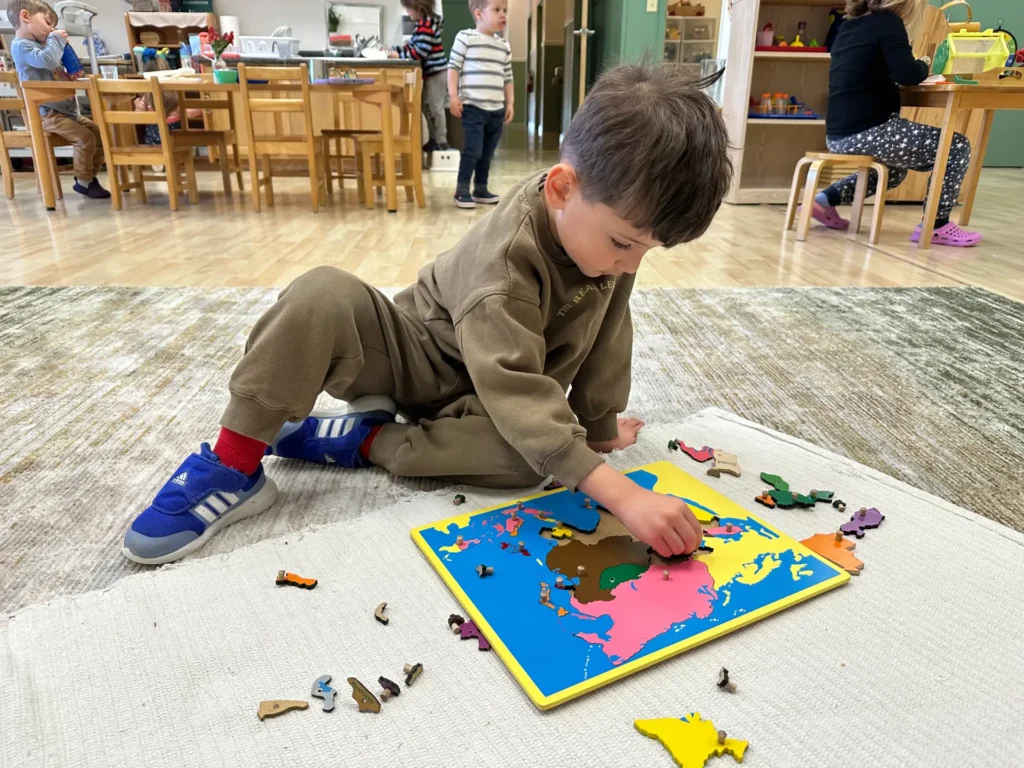
15mos - 36mos
The toddler years are a remarkable time of discovery, movement, language development, and growing independence.
Our Montessori toddler program provides a warm, nurturing, and thoughtfully prepared early childhood learning environment designed to support each child’s natural curiosity and desire to explore, participate, and say, “I can do it myself.”
Through Montessori education, hands-on learning, Practical Life activities, sensory exploration, language development, music, movement, art, outdoor play, and meaningful play-based experiences, children develop confidence and essential skills at their own pace.
Our Montessori teachers gently guide and observe each child while encouraging independence, concentration, coordination, problem-solving, creativity, and a sense of belonging within the classroom community.
Our Montessori toddler classroom supports the development of the whole child, including language and communication, practical life and self-care skills, sensory development, fine and gross motor skills, social-emotional development, independence, and confidence.
By combining authentic Montessori principles with purposeful opportunities for play and exploration, we provide a strong foundation for preschool, early childhood development, and lifelong learning.

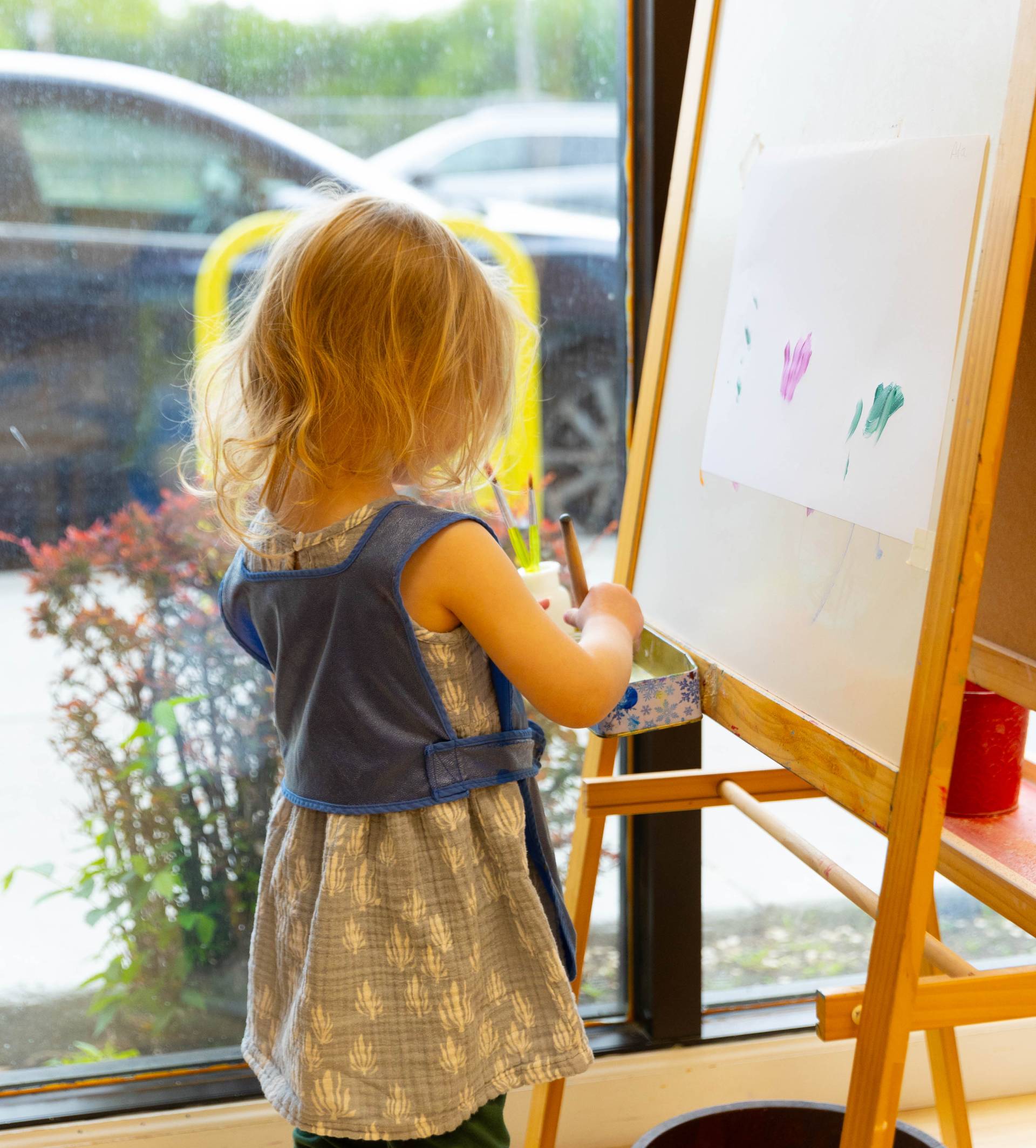
3 - 5 Years
In our Montessori Primary classroom, we thoughtfully blend authentic Montessori philosophy with meaningful opportunities for play, creativity, and social connection.
Through a carefully prepared environment, hands-on Montessori materials, Practical Life, Sensorial, Language, Math, Cultural Studies, Art, Music, and Outdoor Exploration, children are encouraged to follow their curiosity, work independently, and learn at their own pace.
Our goal is to nurture confident, kind, capable, and joyful learners while building a strong foundation for kindergarten and lifelong learning.
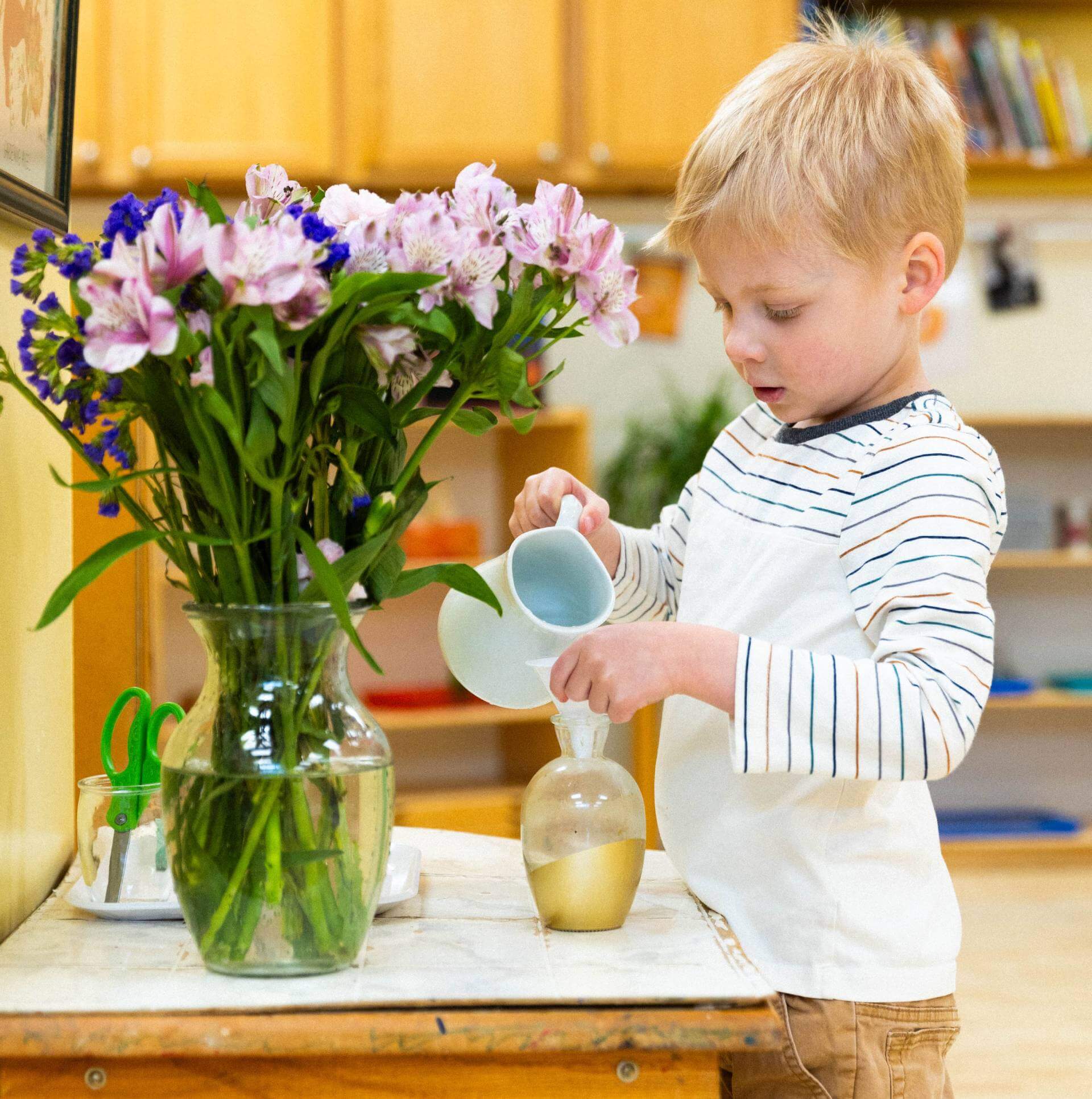
Practical Life
Practical life activities are the cornerstone of a child’s learning journey, laying the foundation for independence, concentration, and self-discipline.
Children are provided with the opportunities to learn:
- Everyday Skills
- Care of Self
- Care of Environment
- Grace and Courtesy
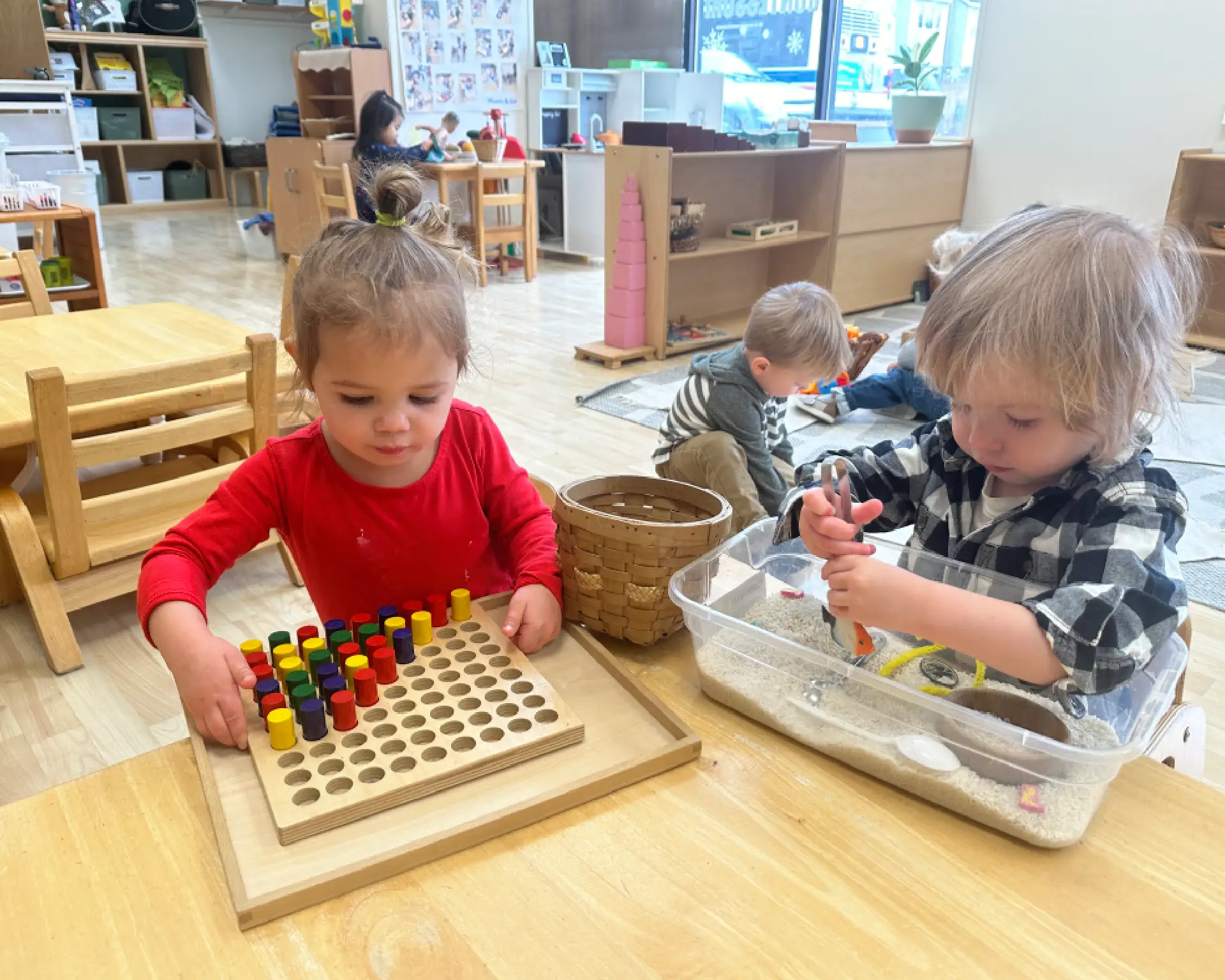
Sensorial Area
Language Area
Our language learning program is tailored specifically for children aged 15 months – 5 years old.
Through purposeful activities and materials children are encouraged to explore, discover and engage with language in meaningful ways. Some particularly significant components are:
- Oral Language Development
- Phonemic Awareness
- Vocabulary Enrichment
- Literacy Exploration
- Multisensory Learning
- Cultural and Multilingual Awareness


Mathematics Area
Mathematics is the science of numbers.
We begin with manipulatives, then slowly lead into abstract concepts.
Montessori mathematics focuses on numeration, the decimal system, and geometry. Our base ten system encourages the child to sequence and order their work.
Beginning with numbers 1-10, 11-99, and 1-1000, the children learn linear counting and recognition of numerals, which then leads into addition, subtraction, multiplication and division concepts.
This is done through fun activities which involve lots of movement, manipulatives and group work. As the child matures, individual work is encouraged and abstract learning begins to take place.
Cultural Area
Cultural subjects include history, geography, art, physical science, cosmology, music and physical movement.
The aim of studying culture is to allow children to experience their place in the universe.
They begin by exploring similarities between their culture and others, and then have appreciation and respect for differences.
They learn how all beings are fundamentally related and discover ways to feel they are significant beings in this world.